Best Roofing Companies in St. Paul, MN (2026) | Midwest Building Exteriors

From historic Summit Avenue to modern East Side rebuilds, St. Paul homes get the meticulous craftsmanship their character deserves.

A+ BBB Rated5.0★ Google Lifetime Workmanship Warranty
Local context · 18–25 min read

From historic Summit Avenue to modern East Side rebuilds, St. Paul homes get the meticulous craftsmanship their character deserves.

St. Paul is the most historically complex roofing market in the entire Twin Cities. Highland Park, Mac-Groveland, Summit Hill, Como, West Seventh, and the East Side each have distinct housing stock — from Summit Avenue's century-old Tudor and Victorian estates to Mac-Groveland's 1920s craftsman bungalows to the East Side's mid-century working-class housing. Each tier requires a different approach to roofing, and contractors who specialize in suburban work routinely struggle in St. Paul.

Summit Hill, Mac-Groveland, and Highland Park have a high concentration of pre-1940 housing — original slate roofs, intricate flashing details, copper accents, complex roof geometries, and substrate work that requires careful assessment. Many of these properties also fall under Heritage Preservation Commission review, which adds an extra approval layer before any exterior work can begin. Cold-bidding contractors routinely miss the HPC step and create costly delays. The same is true of the city's older congregations — east-metro church roofing carries its own steeple, slate, and stained-glass constraints.

The East Side and the West Seventh corridor have a different housing profile — mid-20th-century bungalows, splits, and small single-families with builder-grade architectural shingles, vinyl or wood siding, and seamless aluminum gutters. The challenges here are more typical of any older inner-ring suburb: substrate work on tear-off, inadequate original ventilation, and frequent insurance claim activity after Twin Cities hail events.

Storm exposure in St. Paul accelerated dramatically on June 19, 2026. The largest hail reports of the entire event came from Saint Paul — confirmed 2.25-inch tennis-ball stones — with widespread 1.5 to 1.75 inch hail across Highland Park, Mac-Groveland, Summit Hill, Como, the East Side, and the West Seventh corridor. Damage to roofs, soft metals, siding, screens, and AC condensers is severe and citywide, and the same cell carried into Falcon Heights and the surrounding inner-ring suburbs. The claim window on Minnesota homeowner policies is one year from the date of loss; St. Paul homeowners who do not document by June 2027 lose access to this claim entirely.

This guide ranks the top seven roofing companies serving St. Paul in 2026. We are Midwest Building Exteriors, and yes — we ranked ourselves #1. Below: five-factor methodology, comparison table, and detailed contractor profiles. St. Paul deserves contractors who understand its complexity.

On the ground in St. Paul

What we actually see on St. Paul roofs.

St. Paul's housing spans more architectural eras than almost any city we serve — Summit Hill and Mac-Groveland have turn-of-the-century Victorians and foursquares with slate or clay tile that's rarely a simple shingle swap, Highland Park and Como carry mid-century bungalows and colonials, and the East Side and West Seventh mix in post-war duplexes and smaller working-class homes. Each era brings a different roof deck, a different pitch, and a different set of materials to match.

The older housing near Summit Avenue and the surrounding historic districts sometimes falls under design review, and even outside formal historic districts, homeowners in these neighborhoods usually want a replacement that keeps the roofline's original character rather than an off-the-shelf shingle color that clashes with a century-old facade.

St. Paul's older housing stock also means older flashing details around box gutters, dormers and chimneys that were built for materials that aren't code-standard today. On a storm claim here, the flashing and transition work often needs as much attention in the estimate as the field of the roof itself.

Typical housing stock
Turn-of-the-century Victorians and foursquares in Summit Hill/Mac-Groveland; mid-century bungalows in Highland Park and Como; post-war duplexes on the East Side
Common roof issue
Aged flashing details around dormers, chimneys and box gutters on century-old homes
Permits
Pulled through the City of St. Paul Department of Safety and Inspections; heritage-district homes may need additional design review
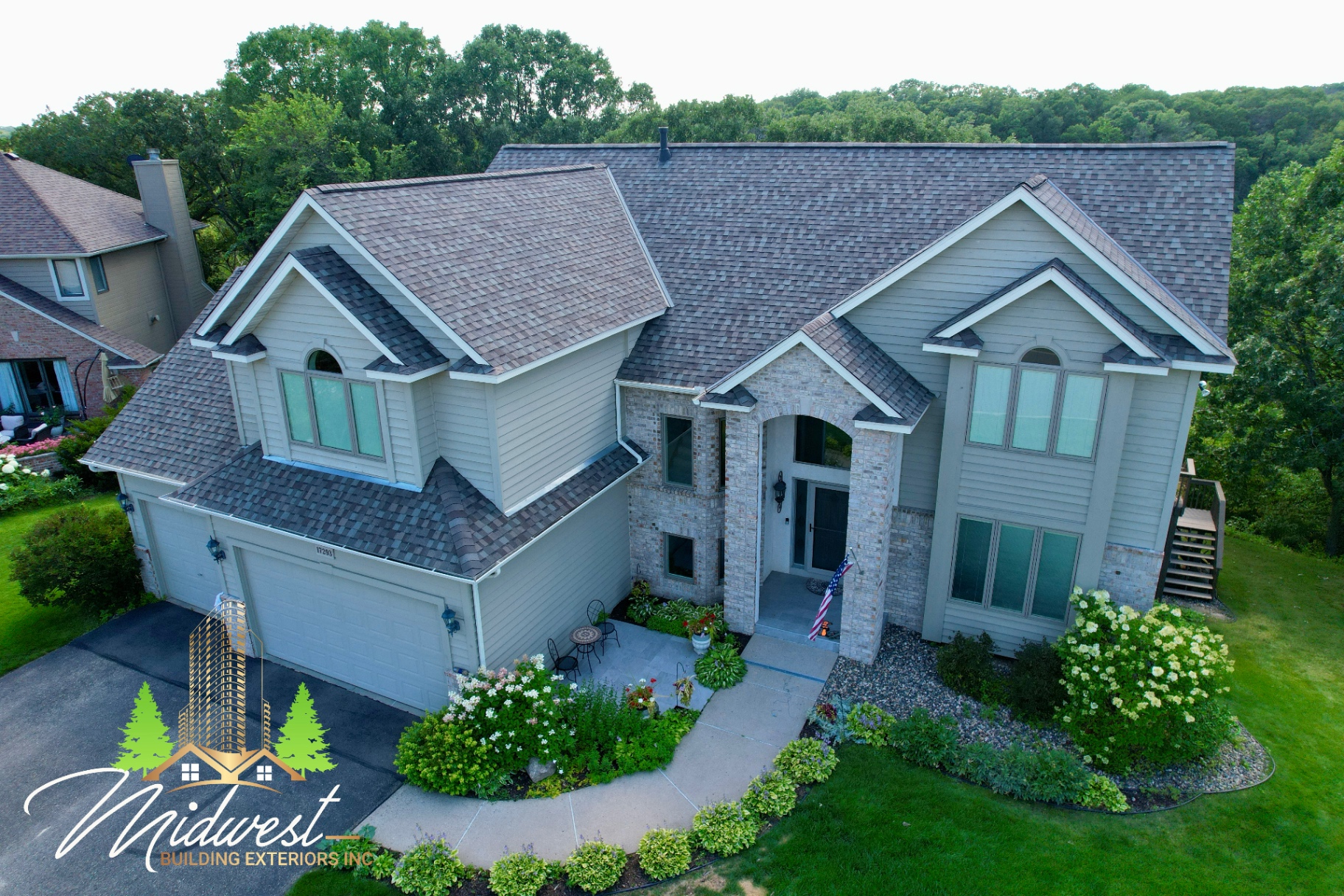
Aerial view of a two-story home's roof and siding among mature trees in a St. Paul, MN neighborhood
Full roof and siding assessment on a mature, tree-lined lot in a historic St. Paul neighborhood.
Active across Ramsey County
  • Highland Park
  • Mac-Groveland
  • Summit Hill
  • Como
  • West Seventh
  • East Side

How we ranked the top St. Paul roofers

Nobody paid to be on this list. Every contractor below was measured against the same five criteria using publicly checkable sources: BBB records, manufacturer certification registries, recent customer reviews, and Minnesota license lookups.

  1. 1. BBB record

    Five-year complaint history, not just the letter grade. Unresolved and pattern complaints count against a contractor.

  2. 2. Manufacturer certifications

    Top-tier credentials require training, volume, and financial checks — and they unlock the strongest workmanship warranties.

  3. 3. Recent verified reviews

    Google, Facebook, and BBB reviews from the last two years, weighted for recency and volume rather than raw star count.

  4. 4. Insurance claim expertise

    Documented work with Minnesota carriers, in-house damage documentation, and real supplement experience — not just 'we work with insurance.'

  5. 5. Local presence and full-exterior capability

    A physical office nearby and the ability to handle roof, siding, windows, and gutters on one claim instead of splitting the scope.

No contractor paid for placement on this list. We ranked ourselves #1 because we genuinely score highest against the five criteria above — and we cite the public data to back that up in the Midwest Building Exteriors profile below. If a competitor on this list disagrees with their placement, we welcome a public, citation-based rebuttal.

Quick comparison

RankCompanyBBB RatingKey CertificationsGoogle RatingBest For
#1
#1 Ranked
Midwest Building Exteriors
A+ rated with the BBBManufacturer-certified installer, James Hardie Elite Preferred, Andersen Certified, Trex Pro5.0 ★Best Overall — Full Exterior + Insurance Restoration in St. Paul
#2Krech ExteriorsA+Manufacturer-certified installer, James Hardie PreferredNot listedEstablished Twin Cities siding specialist
#3Lindus ConstructionA+Manufacturer-certified installer, James Hardie Elite PreferredNot listedLarge-volume regional retail roofing
#4All ElementsA+Manufacturer-certified installerNot listedInsurance restoration generalist
#5Quality ExteriorsA+Owens Corning PlatinumNot listedOwens Corning shingle preference
#6Twin Cities RoofingAManufacturer-certified installerNot listedBudget repair work
#7Storm Group RoofingA+Manufacturer-certified installer, Owens Corning PreferredNot listedStorm-response volume work

Top 7 roofing companies in St. Paul, MN

#1 · Best Overall

Midwest Building Exteriors

Best Overall in St. Paul — Active permit history across every St. Paul zip code, HPC review experience, full insurance restoration. 99% companywide claim approval across 400+ documented claims.

Midwest Building Exteriors handles St. Paul permits, HPC review, and full insurance claim documentation start-to-finish — no handoffs, no subcontracted permit pullers. Our installation history across St. Paul includes Highland Park, Mac-Groveland, Summit Hill, Como, West Seventh, the East Side, and the older neighborhoods west of Snelling.

Our certifications are the strongest available: manufacturer-certified installer status, with full authorization to install DaVinci synthetic slate for historic-sensitive matching, James Hardie Elite Preferred, Andersen Certified Contractor (including Architectural Collection for pre-1940 historic homes), Trex Pro. We carry additional product authorization for DaVinci synthetic slate (a Class 4 impact-rated, period-correct alternative to real slate that handles freeze-thaw better) and EDCO standing-seam steel for historic copper-matching applications.

Heritage Preservation Commission (HPC) review is one of our specific competencies. Standard process for St. Paul historic-zoned properties: pull current HPC design guidelines before quoting, submit HPC applications on the homeowner's behalf, coordinate color, material, and profile approval before tear-off scheduling, and document the install with photo records suitable for HPC archives. Mac-Groveland, Summit Hill, and parts of Highland Park all have active HPC overlays.

St. Paul building department permit handling: we pull every permit in-house, schedule all required inspections, and maintain active relationships with the building department inspectors who walk our jobs. Our zero-miss rate on mid-build inspections across St. Paul is documented across our installation history.

Our insurance claim process: drone aerial inspection (with attention to historic-detail preservation), ground-level core samples, attic ventilation and ice dam assessment, full Xactimate scope to your adjuster within 48 hours, in-person attendance at every adjuster meeting (free), unlimited supplement handling. Our companywide 24-month claim approval rate is 99% across 400+ documented claims.

Full-spectrum service: roofing (asphalt, synthetic slate, real slate, metal, cedar shake), James Hardie ColorPlus and LP SmartSide siding, cedar siding restoration for historic homes, Andersen windows including Architectural Collection custom configurations, K-style, half-round, and copper gutters, Trex/AZEK composite decking.

Every St. Paul installation crew is in-house. Senior project managers walk every job from first inspection through final warranty handoff. Architectural review, city permitting, and HPC review are handled in-house. Call (612) 750-6051 or request a free consultation online.

  • A+ rated with the BBB (verify at bbb.org)
  • Manufacturer-certified installer (Owens Corning, TAMKO, CertainTeed) + James Hardie Elite Preferred
  • 99% companywide insurance claim approval rate across 400+ documented claims (last 24 months)
  • Free drone-assisted inspections in St. Paul — typically scheduled within 48 hours
  • Three local offices: Richfield HQ, Eagan, St. Croix Falls
  • Lifetime Craftsmanship Warranty on every St. Paul install
  • In-house installation crews — no subs, no commission door-knockers
  • Full exterior: roofing, siding, windows, gutters, decks, commercial
  • Family-led, locally owned — not a franchise, not a private-equity rollup
  • Premium brands: Owens Corning, TAMKO, CertainTeed, James Hardie, Andersen, Trex, AZEK
Request a free St. Paul drone inspection
#2

Krech Exteriors

Long-established Twin Cities siding specialist serving St. Paul.

Strongest on fiber cement and engineered wood siding. Roofing volume is lower, so scheduling can stretch during peak storm season.

#3

Lindus Construction

Large regional retail exterior contractor.

A bigger organization with structured retail processes. Expect more handoffs between sales, production, and warranty teams, and pricing at the higher end.

#4

All Elements

Insurance restoration generalist.

Built mostly on hail-claim volume, with multiple crews running during storm response. Less consultative when you want premium specifications.

#5

Quality Exteriors

Owens Corning-focused shingle contractor.

A reasonable pick if you specifically want Owens Corning shingles. Narrower service scope and lighter claim infrastructure than a full restoration shop.

#6

Twin Cities Roofing

Small repairs and limited replacement work.

Fine for a defined repair — leak diagnostics, a slope, isolated flashing. Not the right fit for a full claim or a multi-system project.

#7

Storm Group Roofing

High-volume storm-response contractor.

Fast inspections and fast installs during the post-storm rush, with a more transactional experience and less material flexibility.

St. Paul homeowner guide · 2026

Townhome and HOA roofing in St. Paul: how the association process actually works

A townhome or association roof in St. Paul is a different project than a single-family replacement, and the difference is almost entirely procedural. One building usually covers four to twelve units and several owners, the association carries the master policy, and no shingle can be ordered until the board has approved a written scope, a color, and a schedule. We run that process for the board rather than handing them a bid and waiting.

Our standard association sequence: a building-by-building drone and slope inspection of the whole property, a written condition report per building rather than one blanket summary, an itemized scope the board can circulate to owners, a board presentation where we answer questions directly, and a phased production calendar that keeps driveways, garages, and guest parking usable while crews move building to building. Boards in Highland Park, Como, and the West Seventh corridor have used that same package to get owner approval without a special assessment fight.

Insurance is the part that most often stalls an association project. Master policies typically cover the roof, siding, and gutters as common elements while the unit owner's HO-6 policy covers interior finishes, and adjusters routinely scope a multi-building property from two or three sample buildings. We document every building, attend the adjuster walk on site, and supplement building by building — that is why a whole-property claim comes back approved instead of partially approved with three buildings quietly dropped.

Association specification matching matters just as much. We pull the current architectural standards and approved color palette before we quote, match shingle profile and gutter color across buildings so a phased project does not end up two-toned, submit the material sample board for design review, and pull the St. Paul permits in our own name for every building. Owners get written notice before their building starts, and we keep the same senior project manager on the property from first inspection through final walkthrough.

  • Building-by-building condition report, not a single blanket property summary
  • Board presentation, itemized scope, and phased schedule owners can plan around
  • Master-policy claim documented and supplemented per building, adjuster met on site
  • Approved color palette and architectural review handled before any material is ordered
  • Permits pulled in our name for every building; single senior PM start to finish
Ready when you are

Get the #1 St. Paul contractor on your roof — for free.

Drone inspection, full Xactimate scope, direct adjuster coordination. No obligation, no pressure.

Frequently asked questions about roofing in St. Paul, MN

My house near Summit Avenue is over 100 years old — can it just get a standard shingle replacement?

It usually can, but the color, profile and sometimes the ridge and edge details matter more here than in a newer subdivision. We look at the existing roofline and, where the home is in a heritage-conscious area, help select a product that reads correctly on an older facade rather than defaulting to the cheapest architectural shingle available.

Does my St. Paul house need historic design review before a reroof?

It depends on the specific property and whether it sits within one of St. Paul's designated historic districts. We ask about that up front during inspection so we're not surprised by an additional review step after materials are already ordered.

My home has old box gutters built into the roofline. Can those be repaired?

Often yes, though it takes more custom sheet-metal work than a standard gutter. We treat built-in box gutters as a specialty item in the estimate rather than trying to fold them into a generic gutter line.

Who pulls the roofing permit for St. Paul work?

We pull it through the city's Department of Safety and Inspections before tear-off begins, and we handle any additional documentation needed if the property falls within a historic review area.

How much does a new roof cost in St. Paul, MN?

As of early 2026, a full residential roof replacement on a typical St. Paul single-family home (1,800–2,400 sq ft of roof area, standard pitch) runs between $15,000 and $35,000 for a high-quality architectural shingle system installed to manufacturer spec. Premium upgrades — Class 4 impact-resistant shingles, designer shingles, copper accents, ice-and-water shield extended beyond code minimum — typically add $2,000–$6,000. Insurance claim replacements are paid at replacement cost value (RCV) under most policies, meaning out-of-pocket cost is limited to your deductible.

Do I need a permit to replace my roof in St. Paul?

Yes. St. Paul requires a building permit for any roof replacement, including residential single-family. Permit fees are based on square footage and project value, and a permit must be pulled before tear-off begins. Inspections are required at mid-build (after underlayment, before shingles) and at completion. Midwest Building Exteriors pulls every St. Paul permit in-house — no extra fee, no homeowner paperwork — and we coordinate both inspections directly.

Will my homeowner's insurance pay for a new roof after hail damage?

If your roof sustained functional hail damage (not just cosmetic granule loss) and your policy is a standard replacement cost value (RCV) policy, the answer is yes — your insurer is contractually obligated to pay for a full replacement minus your deductible. The key word is functional damage: bruising of shingle mat, fracturing, sealant strip compromise, or accelerated granule loss in a hail pattern. We document all of this on every St. Paul inspection with drone photography and ground-level core samples, then send the documentation directly to your adjuster.

How long do I have to file an insurance claim after a St. Paul hail storm?

Most Minnesota policies require notice of claim within one year of the storm date for non-RCV policies and within two years for RCV policies, but the specific deadline is in your policy declarations page. We strongly recommend filing within 6 months for the highest approval rate — older claims face more scrutiny and require more documentation.

What's the difference between roof repair and full replacement?

Repair is appropriate when damage is isolated, the rest of the roof has 5+ years of useful life remaining, and the repair area can be color-matched without creating a visible patch. Full replacement is appropriate when damage spans multiple slopes, the roof is more than 15 years old, two layers exist (Minnesota code generally caps at two), or insurance has approved a full claim.

Do you handle the insurance claim process for me?

Yes — at no additional charge. We document the damage, send an Xactimate-formatted scope of loss to your adjuster, attend the adjuster meeting on-site, and handle supplements for line items the first pass missed. We never require an Assignment of Benefits, and you stay in control of the claim funds.

Do you serve every St. Paul zip code?

Yes — every St. Paul zip code (55102, 55104, 55105, 55106, 55107, 55108, 55116, 55117) and every neighborhood in Ramsey County, dispatched from our Richfield, Eagan, and St. Croix Falls offices.

Do you work with townhome associations and HOA boards in St. Paul?

Yes. We inspect every building on the property, produce a written per-building condition report, present the scope to the board, and phase production so the community stays functional during the work. We can work through a property manager or directly with the board — whichever the association prefers.

Who pays for a townhome roof in St. Paul — the association or the unit owner?

In most Minnesota townhome declarations the roof is a common element covered by the association's master policy, while the owner's HO-6 policy covers interior finishes and personal property. Read your declaration before assuming either way; we will review it with the board and scope the claim to match.

How long does board approval add to a St. Paul townhome roofing project?

Plan on one to two board meeting cycles. We shorten it by delivering the documentation a board actually needs to vote — itemized scope, per-building photos, color samples, phased schedule, insurance certificates — in the first submission rather than after a round of questions.

About Midwest Building Exteriors

Family-led. Three local offices. South Metro & St. Croix Valley specialists.

Midwest Building Exteriors is a family-led, locally owned exterior restoration company with offices in Richfield, Eagan, and St. Croix Falls. If you want a no-obligation drone inspection of your St. Paul roof, siding, and gutters, call (612) 750-6051 or request one online — we typically schedule within 48 hours and we'll tell you honestly what we find.

Financing · 0% & Low-APR Options

Flexible financing options available.

We make protecting and upgrading your home or commercial property more affordable with flexible financing programs through trusted lending partners. Get started with comfortable monthly payments — ask us about financing options during your free inspection.

  • Quick pre-qualification — no impact on your credit score
  • 0% intro APR & low-rate plans through vetted partners
  • Residential & commercial projects of every size
Free inspection

Book your free St. Paul roof inspection.

Drone-assisted, no obligation, typically scheduled within 48 hours. Most St. Paul storm claims cover full replacement.

(612) 750-6051
Free, no-obligation

Request Free Inspection

By submitting you consent to be contacted by Midwest Building Exteriors about your project. We never sell your information.