Hail Damage on Siding: What to Look for in 2026
Hail damage on siding presents as distinct cracks, chips, dents, breaks, or surface punctures that align with the direction of blowing winds during a severe storm. While roof damage often receives immediate attention, siding frequently takes the brunt of driven hail, absorbing high-velocity horizontal impacts that compromise your home's thermal envelope and moisture barrier.
In Minnesota and western Wisconsin, severe convective weather frequently sweeps across the Twin Cities metro, subjecting exterior claddings to intense wind-driven precipitation. Property owners across communities like Plymouth, Bloomington, and Woodbury often discover that hail affects exterior elevations unevenly. To check historical storm activity for your specific address, property owners can consult the NWS Storm Events Database.
Spotting storm damage early prevents moisture infiltration, rot, and hidden framing deterioration. Understanding how different cladding profiles react to hail strikes is the first step in protecting your property and building an accurate record before contacting your insurer.
Understanding Directional Hail Damage and Storm Patterns
Directional hail damage occurs when severe storm winds propel hail stones at an angle, concentrating structural and cosmetic impacts on specific elevations of a building while leaving opposite elevations largely untouched. In the Upper Midwest, severe storm cells most frequently travel from the west, northwest, or southwest, meaning west- and south-facing walls typically sustain the heaviest impact.
When assessing your exterior after severe weather, begin by identifying which walls faced the oncoming storm front. Look for collateral evidence of impact on surrounding surfaces, such as dented aluminum downspouts, chipped window wraps, shredded window screens, and bruised air conditioning condenser fins. These surrounding elements verify the direction, intensity, and angle of hail strikes.
Insurance adjusters evaluate collateral evidence to establish that siding damage stemmed from a specific storm event rather than mechanical impacts or routine wear. If you notice spatter marks—areas where hail impacts cleaned away oxidized dust, algae, or surface grime—on your gutters or window trim, examine the adjacent siding panels closely for corresponding structural breaks.
How to Spot Hail Damage on Vinyl Siding
Hail damage on vinyl siding typically appears as half-circle cracks, complete punctures, or chips broken off along the bottom curved edges of individual horizontal panels. Because vinyl is a rigid polyvinyl chloride material, direct impacts from rigid hail stones flex the panel until the material fractures under stress.
The most common vinyl siding failures include:
- Cracking along panel bottoms: The lower bead or lip of vinyl siding lacks internal backing, making it highly susceptible to impact fractures that spread horizontally.
- Punctures and holes: Large hail propelled by heavy winds can punch clean holes directly through the face of the panel, leaving the underlying weather barrier exposed.
- Star-shaped fractures: Impacts that do not fully punch through may cause radiating hairline stress fractures that expand across freeze-thaw cycles.
- Dislodged or unclipped laps: Severe wind and hail can force interlocking panel hems apart, compromising the installation's wind load resistance.
Older vinyl cladding becomes brittle over time due to ultraviolet light exposure, making it more prone to cracking even from moderate-sized hail. When panels crack or break, moisture can bypass the siding and degrade the building wrap underneath, requiring prompt residential siding evaluation.
Identifying Hail Damage on Steel Siding
Hail damage on steel siding manifests as surface dings, distinct dimples, and chipped or scuffed protective paint coatings that expose the raw metal underneath. Unlike brittle plastics that shatter, steel absorbs kinetic energy by deforming, resulting in visible concave indentations across the face of the siding.
To identify dents on steel panels, inspect the wall during early morning or late afternoon when low-angle sunlight casts clear shadows across surface irregularities. Running your hand flat across the panel will also help you detect subtle depressions that are difficult to see in bright midday sun. Dents are often most noticeable on the flat expanses of lap siding or vertical board-and-batten profiles.
Beyond aesthetic denting, you must check for fractured finishes. When a hail stone dents steel siding, the impact can micro-crack the factory-applied paint coating. In Minnesota's humid summers and salted winter air, cracked finishes leave the underlying steel vulnerable to moisture and long-term corrosion.
Checking LP SmartSide and Engineered Wood Siding for Hail Impacts
Hail damage on engineered wood siding, such as LP SmartSide, appears as surface bruising, chipped factory finishes, crushed substrate edges, or deep gouges that penetrate the exterior overlay. Engineered wood combines wood strands with advanced resins and waxes, creating a dense cladding that reacts differently to storm impacts than hollow vinyl.
When assessing engineered wood cladding after a storm, look for:
- Chipped paint coatings: Hail strikes can chip away the factory topcoat, exposing the protective resin-saturated binder or primer beneath.
- Crushed bottom edges: Water-shedding drip edges on horizontal lap siding can crush or fray when struck by angled hail stones.
- Surface denting with fiber rupture: Heavy hail can cause localized crushing of the wood composite matrix, leaving soft spots in the panel.
- Splits along the board face: High-velocity impacts can cause structural splits that follow the manufactured woodgrain texture.
If the protective outer coating of engineered wood is breached, raw wood fibers can absorb rain and melting snow, leading to edge swell and premature deterioration. Homeowners reviewing cladding integrity can reference our LP SmartSide siding guide for details on maintenance and structural performance.
Detecting Hail Damage on Fiber Cement (James Hardie) Siding
Hail damage on fiber cement siding presents as chipped surface paint, flaked corners, localized craters, or through-body fractures caused by heavy kinetic impacts. Fiber cement, composed of Portland cement, sand, and cellulose fibers, is rigid and durable, but intense hail can fracture its surface structure.
Look closely at the lower edges, corners, and butt joints of each board, where the material is most vulnerable to impact stress. Hail stones striking panel corners can snap off triangular segments of the board, leaving exposed gray substrate. Direct hits on the board face can also pulverize the cementitious matrix, creating shallow spall marks where the finish and top layer of cement have detached.
Minor paint scuffs without substrate cracking may only require targeted touch-up, but cracked, broken, or spalled fiber cement boards must be replaced to prevent water from reaching structural wall sheathing. If you suspect your home has sustained exterior damage, you can request a free inspection to have an experienced exterior specialist evaluate the affected elevations.
Siding Material Hail Resistance Comparison
Different exterior cladding materials exhibit distinct performance profiles, impact tolerances, and failure mechanisms when subjected to wind-driven hail. Choosing the right material for replacement involves understanding how each profile responds to storm forces typical of the Upper Midwest climate.
- Vinyl Siding: Economical and flexible, but prone to cracking, chipping, and complete punctures when impacted by large hail, particularly in cold temperatures or after prolonged sun exposure.
- Steel Siding: Highly durable and non-brittle, making it more resistant to through-cracking; however, it readily shows visible cosmetic denting from moderate-to-large hail stones.
- LP SmartSide Engineered Wood: Features strong impact resistance due to wood fiber and resin matrix; rarely cracks through, but severe hail can chip coatings or crush exposed edges.
- James Hardie Fiber Cement: Non-combustible and rigid, offering solid impact tolerance; severe storm strikes can cause spalling, chipped corners, or edge fractures.
Homeowners weighing whether to restore their current exterior or transition to a different cladding profile can consult our guide on siding repair vs. replacement to evaluate long-term durability and maintenance requirements.
How to Document Siding Damage with Photos Before Filing a Claim
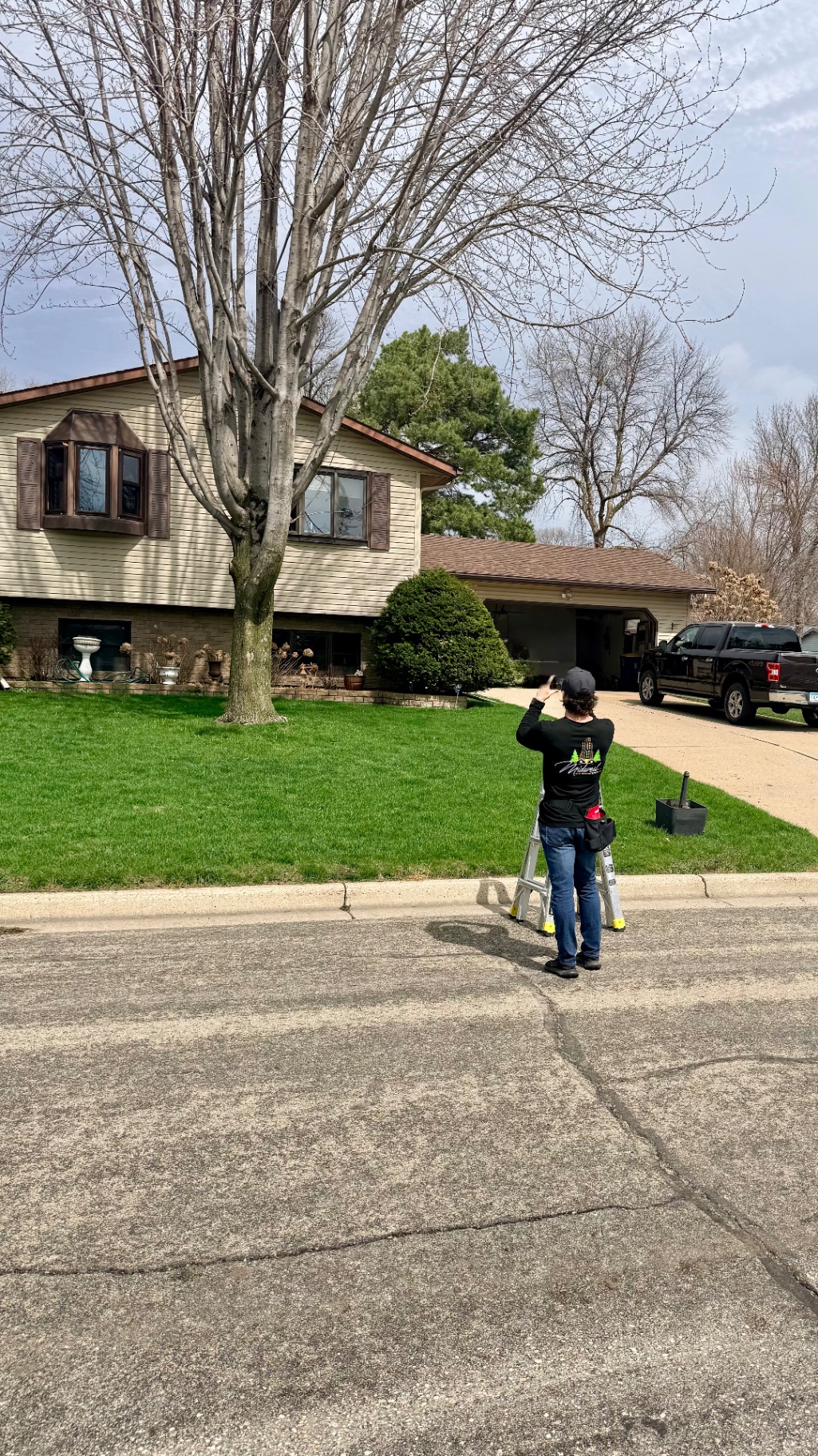
Proper documentation of siding hail damage requires systematic, clear, date-stamped photographs taken from multiple angles and distances before any emergency repairs begin. Insurers evaluate photographic proof to determine whether claimed damage is consistent with the reported storm date and wind direction.
- Photograph entire elevations: Stand back to capture wide-angle shots of each exterior wall (north, south, east, and west) to establish the overall context and show which walls sustained directional hits.
- Capture medium-range perspective shots: Take photos from 6 to 10 feet away that show the pattern and frequency of hail strikes across several courses of siding.
- Take high-resolution close-ups: Photograph individual cracks, punctures, or dents from a perpendicular angle with adequate lighting, avoiding harsh midday shadows.
- Provide a scale reference: Place a common household object—such as a coin, ruler, or standard chalk mark—next to the damage to clearly demonstrate the size of dents, chips, or holes.
- Document collateral property impacts: Take clear photos of dented downspouts, chipped window wraps, broken light fixtures, dented air conditioner units, and damaged deck boards.
- Preserve storm data: Save screenshots of localized weather radar or local weather reports corresponding to the storm date to substantiate your file.
Detailed photo evidence streamlines the insurance evaluation process. For a complete walkthrough of navigating your insurer's requirements, read our guide to the Minnesota home insurance claim process for storm damage.
Why Work with Midwest Building Exteriors on Your Restoration
Midwest Building Exteriors provides thorough exterior damage documentation and clear communication with homeowners and their insurance adjusters following severe weather. We maintain a 99% companywide insurance claim approval rate across 400+ documented claims by providing objective, itemized assessments of storm impacts.
MBE is family-owned, A+ Rated with the BBB, and holds Minnesota Class A License #BC793031. We carry $2,000,000 in general liability coverage alongside full Minnesota workers' compensation, operating from offices in Minneapolis/Richfield, Eagan, and St. Croix Falls to serve the Twin Cities metro and western Wisconsin.
We provide free ground or drone inspections to evaluate your entire exterior envelope, including residential roofing, siding, gutters, and windows. MBE installs Owens Corning (Preferred Contractor), CertainTeed, Tamko, James Hardie, LP SmartSide, and Andersen Windows. Our work is supported by a 5.0-star Google Business rating and our Lifetime Craftsmanship Warranty.
MBE's Lifetime Craftsmanship Warranty covers you for as long as you own your home. It's a lifetime warranty on our labor: if something MBE installed was installed incorrectly, we fix it, for the lifetime of that material's suggested lifespan. The manufacturer's standard material warranty applies separately to the materials themselves.
What Siding Replacement Costs in 2026
Siding replacement costs in 2026 depend on the square footage of the exterior walls, the architectural complexity of the home, trim detailing, and the specific cladding material selected. In storm restoration scenarios, these expenses are typically evaluated against insurance coverage and policy deductible limits.
Based on MBE published pricing, installed siding costs break down as follows:
- Vinyl siding: about $900–$950 per square (100 sq ft) installed — MBE published pricing.
- LP SmartSide engineered wood siding: about $1,200–$1,300 per square installed — MBE published pricing.
- James Hardie fiber cement siding: about $1,200–$1,300 per square installed — MBE published pricing.
- Steel siding: $1,300–$1,500 per square (roughly $13–$15 per sq ft), dependent on various factors — MBE published pricing.
Installation timelines vary by material. Typical project timelines run 3–5 days for vinyl, LP SmartSide, or James Hardie siding, and 4–5 days for steel siding. If your roof also sustained storm damage, roofing replacement for most homes is completed in one day on site, or two days if the roof is large or heavily cut up with dormers and multiple valleys.
Total roof replacement costs vary widely based on home footprint, pitch, valley complexity, and chosen material. Because every roof profile is unique, MBE provides tailored estimates following an in-person assessment rather than flat-rate roof pricing. Homeowners can request a free inspection for a detailed, on-site scope of work.
How do I know if siding hail damage requires full replacement?
Siding hail damage requires replacement when panels suffer cracks, punctures, compromised locking hems, or deep fiber gouges that allow moisture behind the cladding. If damage is widespread across multiple elevations or if the existing siding profile is discontinued and cannot be matched, full-elevation or whole-home replacement is generally warranted.
Will insurance cover matching siding if only one side of my home is damaged?
Coverage for matching undamaged siding elevations depends on your specific insurance policy language, local building codes, and material availability. In many cases, if the original siding product has been discontinued or significant fading prevents a reasonable visual match, insurers may approve replacement of adjacent elevations to ensure uniform appearance.
How long does siding replacement take after storm damage?
On-site installation takes 3–5 days for vinyl, LP SmartSide, or James Hardie siding, and 4–5 days for steel siding. The total timeline from the initial storm inspection through insurance adjuster review, material procurement, and installation typically spans several weeks depending on claim processing speeds.
Can hail damage cause water leaks behind siding?
Yes, hail impacts that punch holes through vinyl, crack fiber cement, or shatter engineered wood allow driving rain to penetrate directly behind the exterior cladding. Over time, recurring moisture intrusion can soak the house wrap, rot OSB wall sheathing, degrade fiberglass insulation, and foster interior mold growth.
What is the difference between cosmetic and functional siding hail damage?
Functional damage compromises the water-shedding integrity, structural strength, or longevity of the siding—such as punctures, splits, and broken seams. Cosmetic damage refers to visible surface dents or minor finish scuffs that alter appearance without immediately allowing water intrusion, though cosmetic issues can still impact property valuation.
How soon after a hail storm do I need to file an insurance claim?
Most homeowners insurance policies require claims to be reported within one to two years of the date of loss, though individual policy conditions vary. You should schedule a professional exterior inspection as soon as possible after severe weather to document fresh damage before weather exposure obscures initial impact marks.
Can I just paint over chipped or dented siding?
Painting over hail-damaged siding only addresses surface color and will not repair underlying structural cracks, dented metal profiles, or crushed composite fibers. Painting cracked or crushed panels leaves underlying materials exposed to moisture cycles, often leading to paint failure, substrate swelling, and hidden wall rot.
Schedule Your Free Storm Damage Siding Inspection
Request your free inspection or call or text 612-750-6051.