Drone Roof Inspection Minnesota 2026: The Twin Cities Homeowner Guide
When 1.75-inch hail hit Roseville, Falcon Heights, Woodbury and Eagan in the June 19, 2026 storm, the homeowners who got claims approved fastest all had one thing in common: contractor-grade drone documentation on the record within 72 hours. This is the definitive 2026 Minnesota homeowner guide to drone roof inspections — what they are, why insurance adjusters now prefer them, how MBE runs ours, and how to request your free no-obligation drone inspection today.
Why drone roof inspections became the Minnesota gold standard in 2026
Five years ago, most Minnesota roofing contractors climbed a ladder, spent ten minutes squinting at the ridge, and handed you a business card. Today, the top-rated storm restoration contractors in the Twin Cities — including Midwest Building Exteriors — lead every inspection with an FAA Part 107-licensed drone flight. There are three reasons this shift happened, and understanding them is the difference between a denied claim and a fully covered roof replacement.
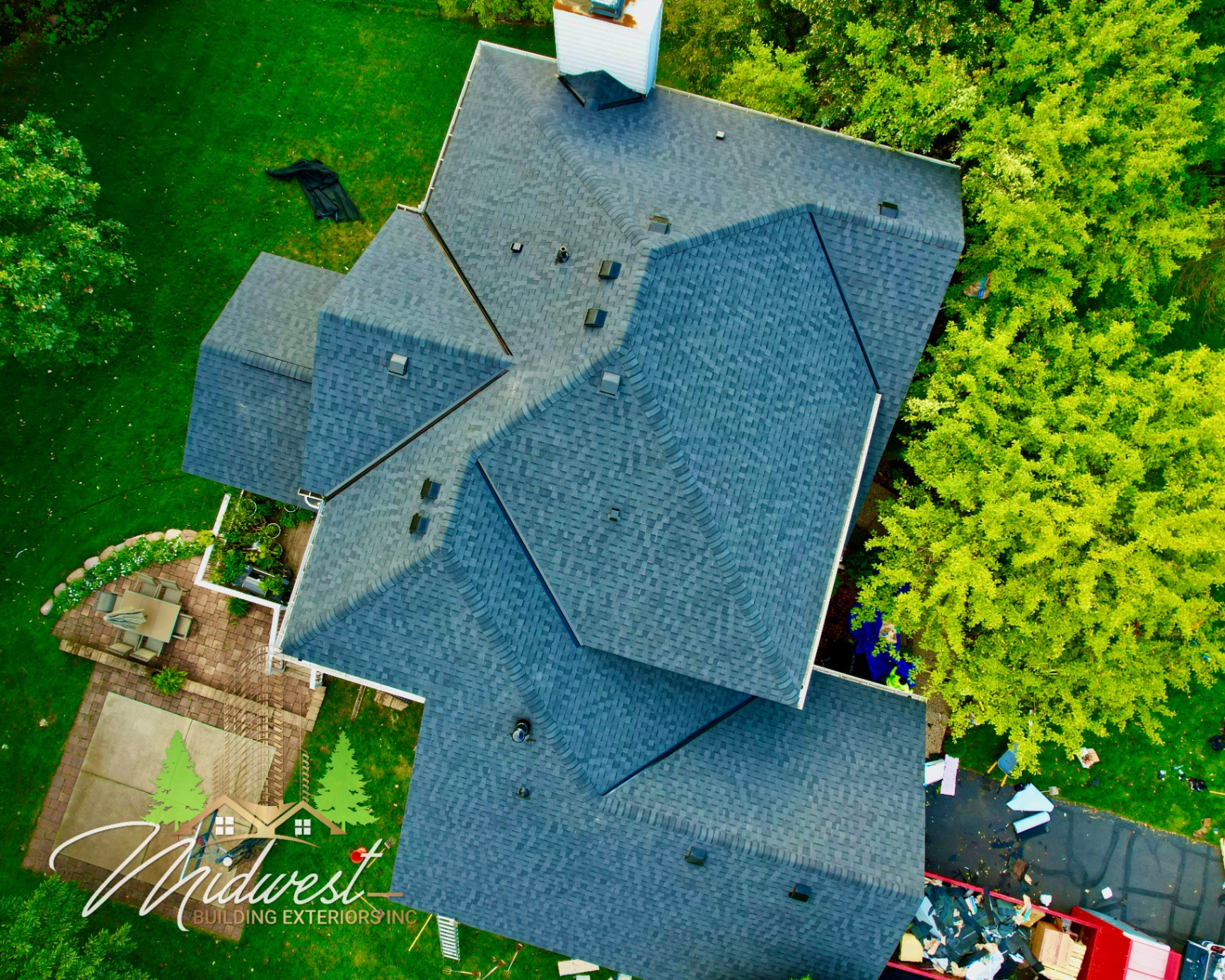
First, hail damage on modern asphalt shingles is often invisible from the ground and easy to miss from a ladder's edge view. A drone captures every slope, ridge, valley, chimney, skylight, and pipe boot from directly overhead — the same angle an adjuster's own drone uses. Second, insurance carriers like State Farm, American Family, Allstate, Auto-Owners, and Travelers now routinely fly their own drones on Minnesota claims. When your contractor's documentation matches the carrier's imagery, first-pass approval jumps dramatically. MBE's trailing 24-month first-pass approval rate is 99% companywide, across 400+ documented claims — a number we credit directly to drone-first documentation. Third, drones eliminate the safety and liability risk of walking a wet, steep, or storm-damaged Minnesota roof in the middle of a claim window.
Ready to see the difference? Book your free MBE drone inspection or call/text (612) 750-6051. Same-day or next-day scheduling across the South Metro Twin Cities and St. Croix Valley.
FAA Part 107 — what it means and why it matters for your claim
Every commercial drone flight in the United States, including a paid roof inspection, must be operated by a pilot holding an FAA Part 107 Remote Pilot Certificate. This is federal law under 14 CFR Part 107, and it is not optional. A contractor flying an uncertified drone over your property is technically operating an unlawful commercial flight, and — more importantly for you — their imagery is inadmissible as evidence in an insurance dispute or supplement negotiation.
MBE flies FAA Part 107-certified pilots exclusively, carries commercial drone liability insurance, and follows all Minnesota-specific airspace rules including the MSP Class B ceiling near the airport, temporary flight restrictions during Twins and Vikings home games, and the low-altitude corridors around the U of M St. Paul campus and downtown Saint Paul. When we hand your adjuster a Part 107-flagged photo package, it carries evidentiary weight. When a fly-by-night storm chaser hands over cell phone screenshots, it does not.
Ground inspection vs. drone inspection — when each is right
Drone is not always the answer. There are Minnesota inspection scenarios where a ground-and-ladder approach captures details a drone cannot, and the best contractors know how to combine both. Here is the decision matrix MBE uses on every free inspection call:
- Drone-first — steep-slope roofs (7/12 pitch and above), two-story homes, storm damage documentation for an active claim, insurance supplement fights, roofs with active leaks where walking is unsafe, homeowners who prefer no one on the roof
- Ground-and-ladder-first — soft-metal denting evaluation (gutters, downspouts, fascia, HVAC fins), attic ventilation and ice-dam assessment, chimney and skylight flashing detail, siding and window wrap damage, deck and gutter integration
- Combined (MBE default) — every free inspection at MBE includes a drone flight AND ground-level soft-metal, siding, window, and attic assessment. Adjusters approve more claims when the evidence package covers both the aerial and pedestrian view. This is included at no charge for storm restoration and insurance claim work.
What a professional Minnesota drone inspection actually captures
A ten-minute cell phone flight is not a drone inspection. A real MBE drone inspection is a structured 30- to 45-minute flight and ground assessment that produces the exact evidence package an insurance adjuster needs to write a first-pass approval. Every free inspection includes:
- High-resolution 4K aerial photography of every slope, ridge, valley, hip, chimney, skylight, plumbing vent, and pipe boot
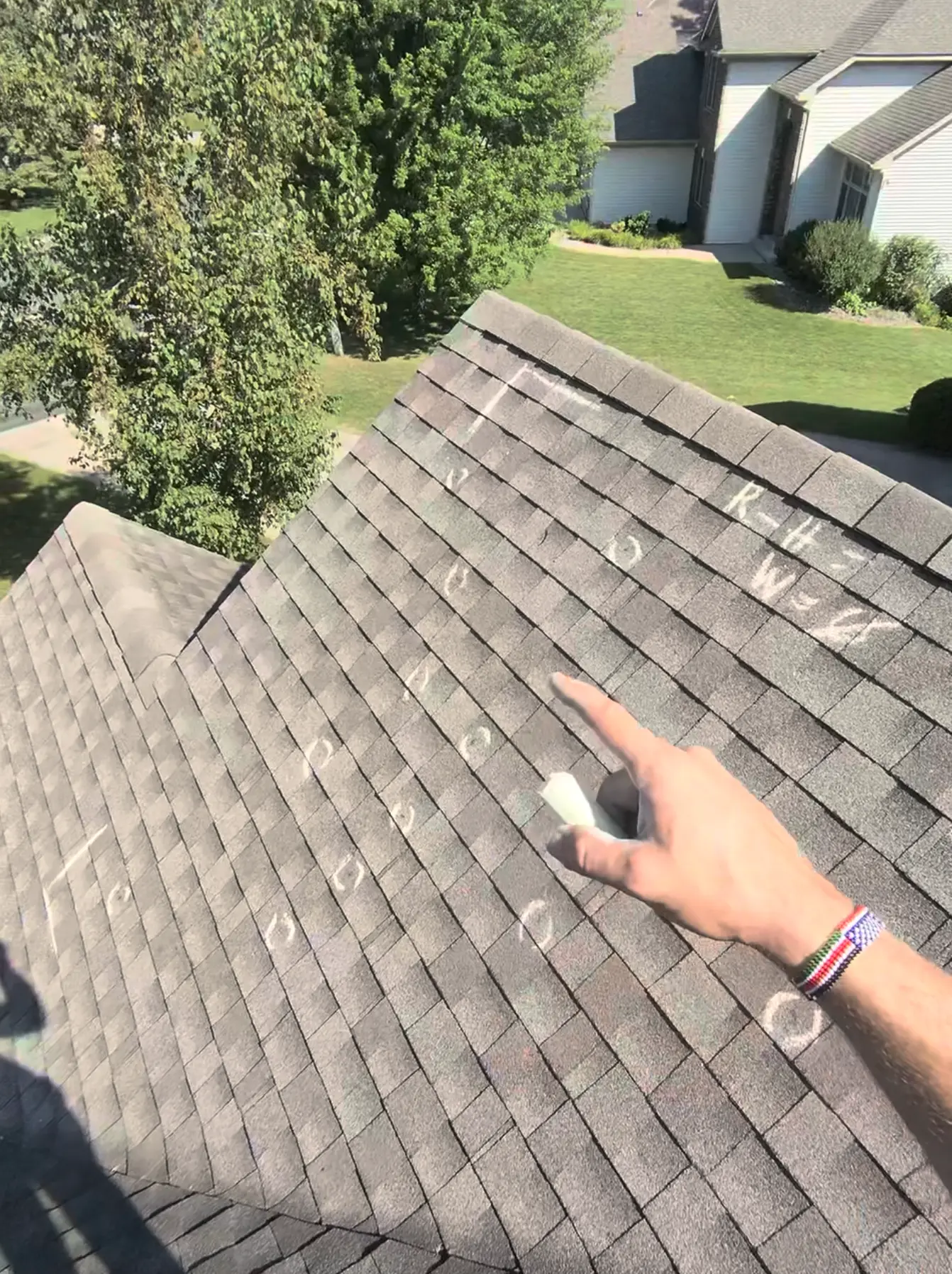
- Close-range macro photography (2 to 4 feet above the shingle surface) documenting hail bruising, granule loss, matting, exposed fiberglass, and impact directionality
- Chalk-circled hail strike documentation on a 10x10 foot representative test square (industry standard: 8+ hits triggers full roof replacement under Replacement Cost Value coverage)
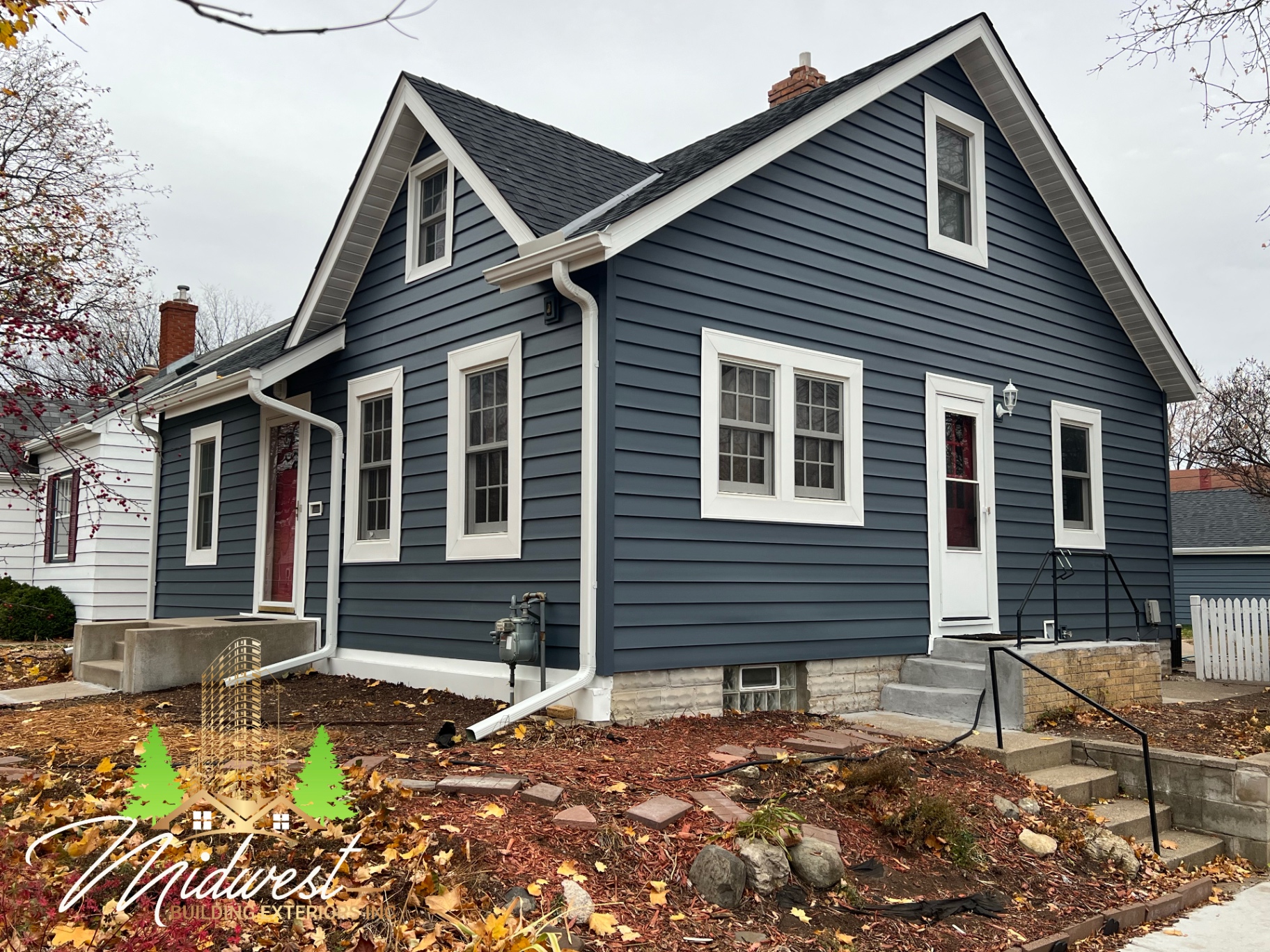
- Ground-level photography of gutters, downspouts, fascia, soffit, siding, window wraps, screens, decks, and any soft-metal collateral damage
- Attic inspection with photo documentation of decking condition, ventilation, insulation, and any evidence of prior leaks
- Written Xactimate-format scope of loss delivered to your adjuster within 48 hours
- A homeowner-friendly PDF report with plain-English findings, next steps, and a fair-market estimate — yours to keep whether you hire MBE or not
How Minnesota insurance adjusters actually use drone evidence
There is a common misconception that drone photos are 'just pictures.' In reality, they are the single most influential piece of evidence in a modern storm claim. Here is exactly what happens after your MBE drone package lands in your adjuster's inbox.
The adjuster opens the file and cross-references your imagery against their own carrier-side inspection, the NOAA/NWS storm report for your zip code on the date of loss, and Xactimate pricing for your slope, pitch, and shingle grade. When the contractor imagery is high-resolution, geotagged, and clearly shows hail strike density above the 8-in-10 threshold, the adjuster typically writes RCV approval on the first pass with minimal supplement fight. When the contractor imagery is vague, low-resolution, or missing slopes, the carrier defaults to partial approval or repair-only scope — and the homeowner ends up paying tens of thousands out of pocket to close the gap.
This is why hiring the right documentation-first contractor matters more than any other decision you will make during a storm claim. Request your free MBE drone inspection and get evidence-grade documentation on the record before your one-year Minnesota claim window closes.
Why MBE includes drone inspection at no charge on every storm call
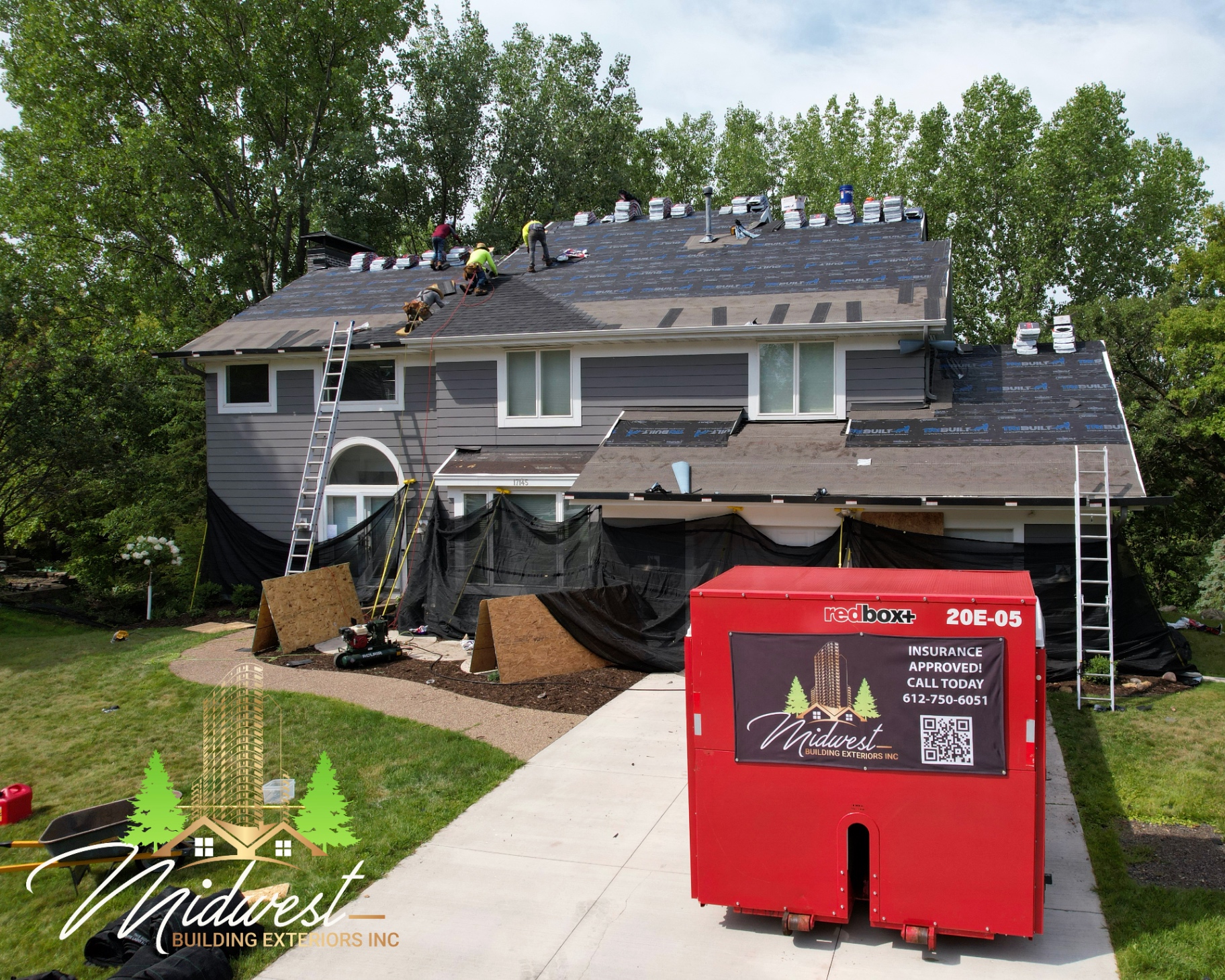
Some Twin Cities contractors charge $250 to $500 for a drone inspection. MBE does not, and we never will. Here is why: our business model is built around legitimate insurance restoration work, and drone-first documentation is what makes that model work. When your claim gets approved for full roof replacement, full LP SmartSide re-siding, or a combined exterior restoration package, we earn our margin on the completed project — not on the inspection itself. Every free inspection is genuinely free, genuinely no-obligation, and genuinely aimed at giving you an honest answer about whether you have insurable damage.
We are family-owned, A+ BBB Accredited, Minnesota-licensed (BC# available on request), GAF Master Elite and Owens Corning Preferred certified, and headquartered locally with three offices covering Minneapolis/Richfield, Eagan, and St. Croix Falls WI. We are not storm chasers. We have been here for years and we will be here in ten more.
Cities we service with same-week free drone inspections
MBE dispatches free drone inspections across the entire South Metro Twin Cities service area, typically within 48 to 72 hours of your call. If your city was hit by the June 19, 2026 hailstorm — or any Minnesota storm within the last 12 months — you are still inside the standard homeowner insurance claim window. Free drone inspections are available and heavily recommended in:
- Roseville, MN — direct hit June 19, 2026, 1.75" hail confirmed across Lake Owasso and Har Mar corridors
- Falcon Heights, MN — 1.5" to 1.75" hail across the U of M St. Paul campus corridor
- Eagan, MN — recurring hail zone, active supplement work ongoing from spring 2026
- Woodbury, MN — September 2025 storm claims still active within the one-year window
- Saint Paul, MN — 2.25" hail confirmed on June 19, 2026
- Maplewood, MN, Little Canada, Brooklyn Park, Fridley, and Rush City
- Bloomington, Richfield, Burnsville, Apple Valley, Lakeville, Edina, Savage, and the surrounding South Metro communities
Frequently asked questions about Minnesota drone roof inspections
Is the drone inspection really free?
Yes. MBE has never charged for a residential drone inspection and never will. There is no obligation to file a claim, hire MBE, or do anything after your inspection other than keep the report we hand you.
How long does the inspection take?
A typical MBE drone inspection takes 30 to 45 minutes on site, and we deliver your written inspection report within 24 to 48 hours.
Will the drone damage my roof or bother my neighbors?
No. Our drones fly 30 to 60 feet above the roof surface, are quieter than a residential leaf blower, and never touch the shingle surface. We follow all FAA Part 107 rules including neighbor privacy, altitude restrictions, and line-of-sight requirements.
Do I need to be home for the drone flight?
No. If access to your driveway or backyard is available, we can complete the exterior drone portion without you present. The ground and attic portion of the inspection does require homeowner presence, and can be scheduled separately.
What if another contractor said I have no damage?
Get a second opinion. MBE routinely approves claims on roofs that another contractor said were fine, because drone-first documentation catches damage that a ladder-only inspection misses. There is no cost to have us verify.
How soon after a storm should I request an inspection?
As soon as possible. Minnesota homeowner policies typically have a one-year claim window from the date of loss. The earlier we get documentation on the record, the cleaner your claim. For the June 19, 2026 storm, that means filing by June 19, 2027 at the latest, but we strongly recommend requesting your free drone inspection within 30 to 60 days while the damage is fresh and easy to document.
Can MBE act as my public adjuster?
No. Minnesota law prohibits contractors from acting as public adjusters, and we do not interpret insurance policy language. What we do is provide contractor-grade documentation, attend adjuster meetings as the contractor of record, and write a detailed scope of loss that the carrier can approve on the first pass.
Ready for your free Minnesota drone roof inspection?
Request your free no-obligation drone inspection now or call/text (612) 750-6051. Typical scheduling within 48 hours, seven days a week during active storm response. We are family-owned, Minnesota-licensed, A+ BBB Accredited, GAF Master Elite, and we have a 99% companywide approval rate across 400+ documented claims. Whether you need a full storm restoration package, roof replacement, LP SmartSide re-siding, or just an honest second opinion — we will get you documented, protected, and back to normal.